
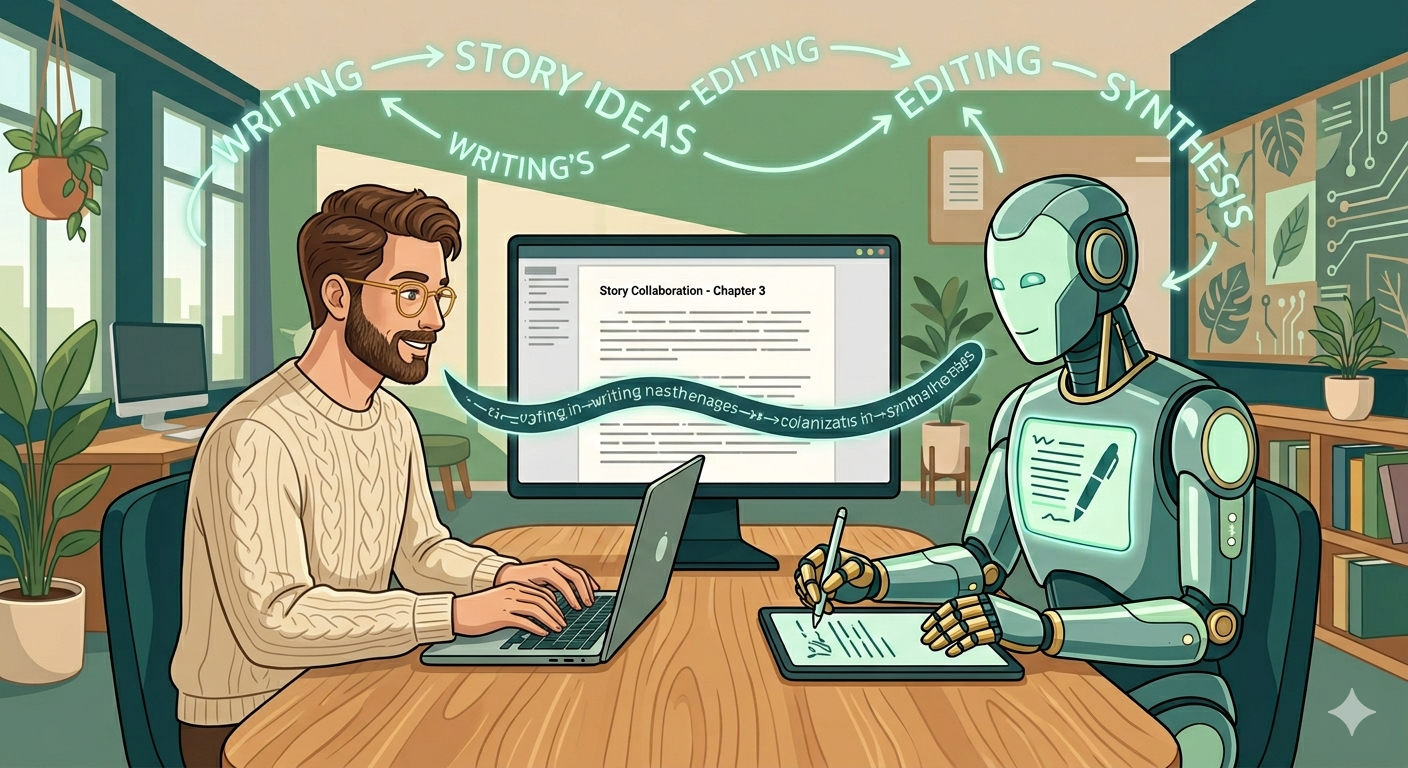
Your brand voice is the only asset AI can’t replicate, it comes from your story, your purpose, and the reason you do what you do, not from a prompt.
Key takeaways:
- AI is great for input (brainstorming, research, planning) but shouldn’t control your output (final messaging, brand voice)
- Your brand voice reflects your perspective, intention, and purpose: things AI can’t create
- Start building your voice by writing your “why” honestly, then identify patterns in tone and personality
- Use AI to support your process (grammar, flow, structure), but always preserve your unique voice
- Consistency in brand voice builds trust, recognition, and credibility with your audience
AI can help you write faster, gather ideas, summarize information, and even support your research, but when it comes to your brand voice, that’s where the human part still matters most.
I’m not against AI at all. In fact, I think it’s incredibly useful when you use it the right way. On the input side, AI can help you prepare, plan, strategize, and brainstorm. It can make you more efficient and help you sharpen your ideas behind closed doors.
However, on the output side, you cannot let AI do everything for you.
Your brand voice comes from your own perspective, your intention, and your purpose. Honestly, nothing carries more intention than the reason you do what you do.
For me, creating content comes from passion. I enjoy sharing what I’ve learned over the years, and that naturally shapes the way I speak and write. That same principle applies to your brand: the way you communicate should reflect who you are and what you believe.
AI can support your process, but your voice is what makes your content feel real, personal, and memorable. That’s what builds connection with your audience.
Crafting Your Brand Voice
This is one of the most difficult questions I had to answer in my career. Even though there are many brand guides that big companies build to preserve their identity, some of them are very extensive and well-researched. This can feel like an ultra-complex process, but the key here is to start simple.
Write about your “why” – the reasons your brand exists, what’s the story? Were you called to take action? Or has it been a long-time dream?
The key here is to be as honest as possible and explain what took you from point A to point B. You’ll start to notice patterns and personality traits.
Does your writing feel inviting, personal, fun, or professional?
In my case, I tend to write like I speak, then I allow AI tools to help me with flow and grammar structure. This will help you identify spelling patterns, common words you use, and how to express yourself on certain channels like social media, email, newsletters, websites, etc.

Adding AI Into the Mix
54% of Americans are experiencing AI fatigue, and 52% of consumers reduce engagement when they suspect content is AI-generated.
We can’t avoid technology, because it would be counterproductive to ignore it.
However, we must collaborate effectively. AI works as long as you provide enough context and review its output after you’ve done the research and work yourself. I know this sounds like common sense, but I can’t stress this enough.
AI will still change how you express yourself, and it will add its own voice if you don’t prompt it to preserve your voice and style.
You can further enhance your brand voice by asking AI to help you determine your personality spectrum and to lay out writing rules clearly. This will give you significantly more than just a story of your brand – it will give you effective guidelines to use across your brand messaging.

Why Is a Brand Voice Important?
Consistency is the keyword. Your audience needs to identify that this is your brand speaking and not any other brand.
It’s imperative to branding that the tone of voice of a company is identified in every message, conversation, or short interaction with clients, stakeholders, peers, and everyone inside the organization.
If there’s no consistency in the brand voice, the company loses its relevance in the market. It disorients your buyer and damages reputation, credibility, and trust. Hence, the importance of solidifying your writing and style to preserve your brand’s personality.
FREE! Brand Style Guide Template
I hope this entry helps you understand how to create your brand voice and integrate AI tools to enhance your process safely. See you in the next entry!

SEO for Beginners in 2026
SEO in 2026 is about matching search intent, building trust, and creating content that answers real questions; say goodbye to stuffing keywords or chasing high-traffic terms that don’t convert. Key takeaways: If you want to understand how search engines work today, you need to know that SEO has two big sides: what happens on your…


Why Posting Every Day Isn’t Growing Your Brand
We see this all the time: people start from scratch, hire an agency or a craft a social media strategy, and after a couple of months, they say, “We’ve been posting daily… but nothing’s working.” The truth is, this usually has more to do with what you’re saying and who you’re saying it to than…

Text Bite: How Social Media Marketing ACTUALLY Works (No Guru Stuff)
From my experience (and I’ve been doing this for over nine years) there’s no magic formula. What really works on social media takes patience, experimentation, and a lot of storytelling. My approach to marketing has always been about one thing: the human side. Think about it, the keyword in “social media” is social. You have…
Leave a Reply